
OVERVIEW OF HEALTH & SAFETY RESOURCES IN LORING PARK NEIGHBORHOOD
Our city and state provide essential safety services to serve you and your loved ones. Below is a quick reference to those services. If you are encountering an emergency, call 911 immediately.
IMPORTANT NUMBERS
- 911: When you need to report a situation that requires a police officer at the scene, to summon an ambulance or Fire Department, to report a crime or fire in progress
- 411: Send anonymous tips to the Minneapolis Police Department at (612)-692-TIPS (8477) or text to 847411 (tip411)
- 311: Call this number when you need non-emergency information or services (street lamps, street signs, pot holes)
Mental Health & Wellness Resources
988 Lifeline
Whether you’re facing mental health struggles, emotional distress, alcohol or drug use concerns, or just need someone to talk to, the 988 Suicide & Crisis Lifeline caring counselors are here for you. You are not alone. You can call 988 or visit their website to learn more: 988lifeline.org.
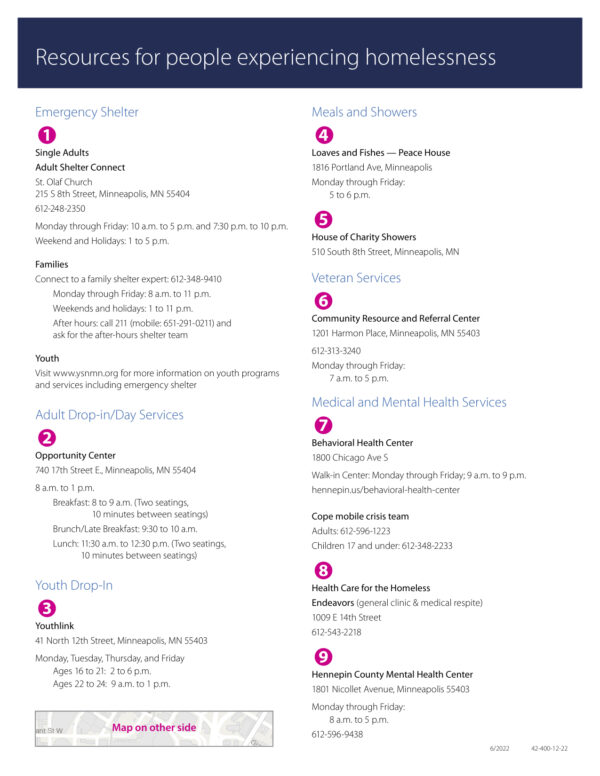
Hennepin County Behavioral Health Center
The interdisciplinary team at the walk-in center will take time to get to know you, address your immediate needs and connect you to long-term treatment and recovery supports. We’ll work alongside you until you are connected to meaningful resources and supports.
- Walk-in, no appointment needed, no need to call ahead
- Hours: 9 a.m. to 9 p.m. daily
Location
- Walk-in center
1800 Chicago Avenue South
Minneapolis, MN 55404
Eligibility
- Hennepin County resident 18 or older
- We don’t turn anyone away due to payment or insurance status
Learn more
White Earth Urban Office
The White Earth Urban Office is located at 1730 Clifton Place, houses several urban support programs and tribal services for members of the White Earth Nation living in the Twin Cities area.
- Human and Social Services: General assistance, transportation help, and tribal constituent support.
- Behavioral Health: The White Earth Urban Substance Abuse Program (Suite 100/201) offers outpatient addiction treatment and support.
- Indian Child Welfare (ICW): Family and child welfare advocacy (Unit 111).
- Medication Assisted Treatment: The Urban Medication Assisted Treatment Program (UMAT).
- Address: 1730 Clifton Pl, Minneapolis, MN 55403
- General Phone: (612) 813-1590
- Hours: Monday through Friday, 8:00 AM – 4:30 PM
- www.whiteearth.com/divisions/human_services/contact
City of Minneapolis Mobile Medical Unit
The City’s first-ever Mobile Medical Unit (MMU) will offer private, dignified care, providing treatment and resources directly to the community. Expected services include:
- Basic health screening
- Wound care
- Vaccinations
The MMU aims to:
- Bridge healthcare access gaps
- Reduce barriers in underserved communities
Learn more, find the calendar or request the unit here.
Safety Resources
MPD Resources
- Minneapolis Crime Data Dashboard:
https://www.minneapolismn.gov/government/government-data/datasource/crime-dashboard/ - Minneapolis Crime Locations Map: Hover or click on the icons to learn more.
https://www.minneapolismn.gov/resident-services/public-safety/police-public-safety/crime-maps-dashboards/crime-locations-map/ - Crime Tips & Sign up for Crime Alerts:
https://www.minneapolismn.gov/resident-services/public-safety/prevent-prepare/crime-prevention/ - General Public Safety Links:
https://www.minneapolismn.gov/resident-services/public-safety/ - Reneé Allen (Crime Prevention Specialist for 1st Precinct):
Renee.Allen@minneapolismn.gov
MAD DADS Minneapolis
Mad Dads Minneapolis commitment to community service drives them to make a tangible difference in the lives of those around us. Through dedicated efforts and collaborative initiatives, they strive to uplift and empower communities to foster sustainable change. Learn more about them at maddadsminneapolis.org.
Resources for Victims and Witnesses from Hennepin County
Victim Navigation Services: Jen Randall is the coordinator of Victim Navigation Services, which helps guide victims of crimes or violence who are not receiving assistance through the criminal justice system (because they are not part of a case, or there is no case). Jennifer.randall@hennepin.us. She can help guide residents by doing an assessment of their needs and then connecting them with services through a warm hand-off to our community partner who provides trauma counseling and other resources.
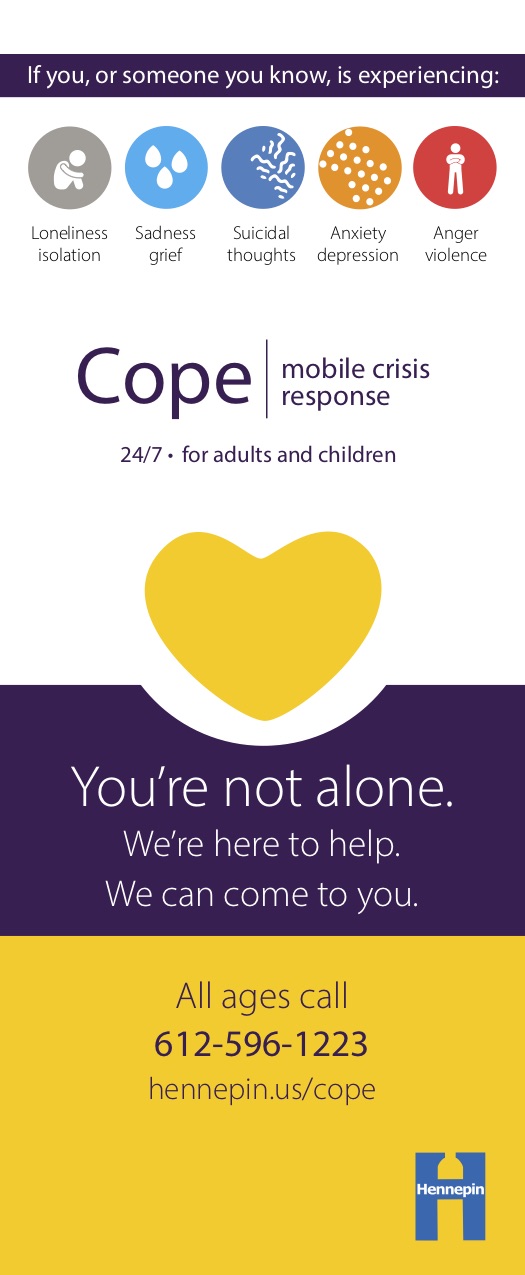
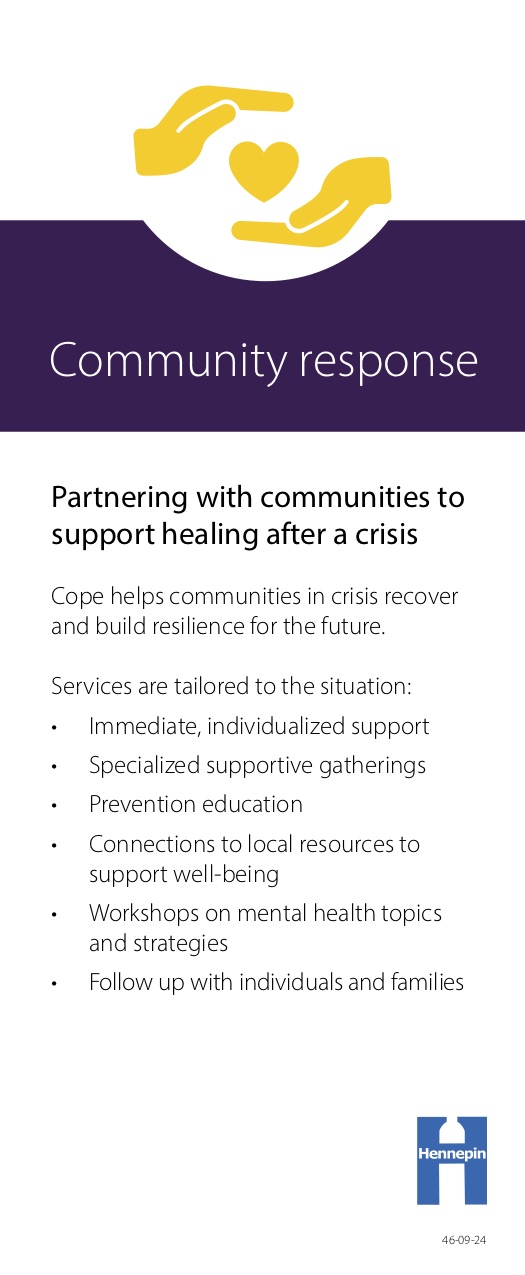
COPE: Hennepin County’s mental health emergency program, known as Cope, offers 24/7 mobile response teams to help people in an emotional crisis. The team meets people where they are, whether that’s at home, school, a group home or public place. Cope: mobile crisis response | Hennepin County In Hennepin County: 612-596-1223.
Restorative Justice
In contrast to the more punitive and adversarial legal process, restorative justice assumes that relationships are more powerful than punishment for long term behavior change. Offenders are held accountable by taking responsibility for their actions and having the opportunity to make amends.
Restorative Justice Community Action (RJCA) brings people together to repair harm.
Through face-to-face small-group meetings called community conferencing, trained volunteer facilitators and community members meet with adults and youth who’ve committed low level offenses to talk and learn about the impact of their behavior on the community, as well as themselves, and create an agreement to make amends through community service and other kinds of activities.
This important community work is happening in Minneapolis and Hennepin County!
RJCA invites residents, property and business owners and others affected by livability offenses to meet with persons who have committed offenses in the Minneapolis neighborhoods we live and work in. As a community-based nonprofit, we believe that the process of resolving livability issues locally strengthens the overall fabric of our community.
Results and Impact
Each year RJCA helps over 400 youth and adults (“Referred Participants”) to address their actions in a way that builds relationships, connects them positively with community and move toward healing. In the past year, referred participants have contributed over 2,300 hours of volunteering and $2,100 in donations to local organizations, gave 247 apologies, and 230 individuals worked on personal development or artistic activities.
How to get involved:
• Observe a Community Conference
• Participate as a community member in conferences
• Guide community conferences as a trained facilitator
• Identify service projects in your area so participants can fill community needs
• Donate a tax-deductible contribution
Additional Programming: Community conversations on understanding and addressing implicit bias. (Contact us for further details)
(612) 746-0780 | info@rjca-inc.org | www.rjca-inc.org